
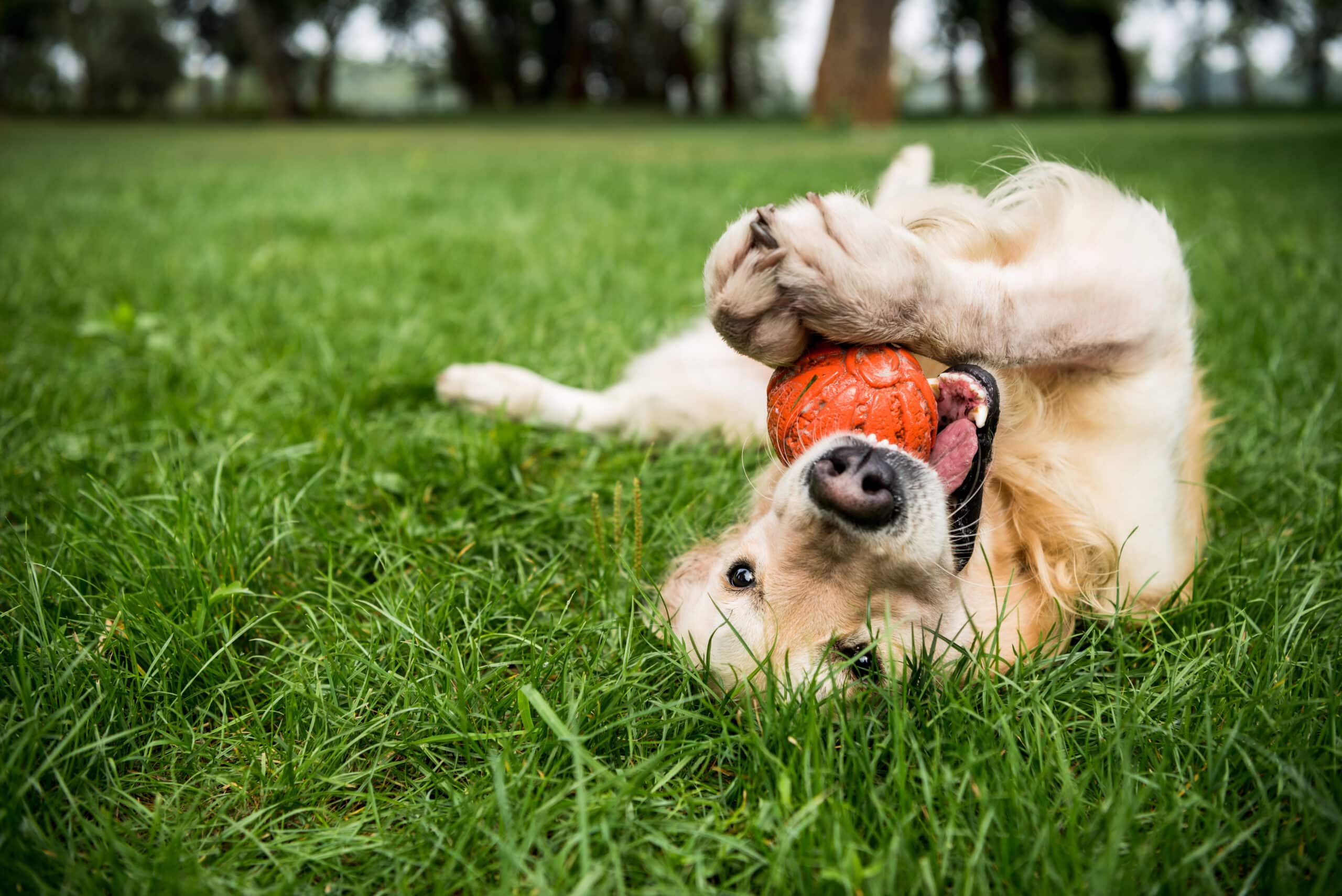
Many people think that owning pets and having beautiful landscaping are incompatible. Dogs especially like to dig things up, and there’s the difficulty of “dog spots” on the grass. You don’t want to choose between your landscaping and your dog, and luckily, you don’t have to. Our team at Cataldo Landscape & Masonry is here to help you design beautiful MA landscaping that’s also pet-friendly.
Owning pets doesn’t have to keep you from having beautiful MA landscaping. Here are some tips for landscaping with dogs in mind.
Pet-Friendly Plants
Plants can be pet-friendly in two ways. First, there are plants that are safe for dogs to ingest. Dogs are unlikely to eat plants, but you never know what they’ll get up to, so it’s best to be safe. Here’s a list of common plants that are toxic to dogs. Second, there are plants that create a comfortable environment for your dog. Trees provide shade in the summertime so your pup has a cooler place to rest. Hedges and privacy trees provide clear boundaries, so your dog knows exactly where the “safe zone” is in your yard.
Using Hardscapes
If you want a landscape that’s even more dog-resistant, hardscape features are the way to go. A large patio means less grass to mow and less for your dog to dig up and damage (if you have that kind of dog). Edging and walkways can also help create distinct areas in your yard, making it easier to train your dog to do its business in a specific spot. Fencing is also an effective way to keep your dog out of certain areas of your yard.
Dealing with Dog Spots
Speaking of your dog doing its business, dog spots are a problem for all dog owners who also want to maintain their lawns. Dog spots are brown patches on grass caused by high nitrogen levels in dog urine. The excess nitrogen burns the grass, resulting in dry, brown spots on your lawn. The only way to eliminate dog spots entirely is to train your dog to use gravel, mulch, or a non-grass area of your yard. If you already have these spots, removing the dead grass and reseeding is the most effective way to restore your lawn. If the grass isn’t quite dead, fertilizing and watering the spot can bring it back.